Should You Open a Card Shop or Stay Online? Pros and Cons
Summary
At some point, every serious reseller hits the same fork in the road: Do I open a physical card shop, or do I stay online? The answer isn’t about ego or tradition. It’s about capital efficiency, leverage, and how you want your business to scale. This guide breaks down the real pros and cons of each path—and why collectibles financing is often the deciding factor for growth-focused operators.
How collectibles financing changes the decision
Let’s be honest.
Most people don’t ask this question until they already feel stuck.
Sales are steady. Inventory is strong. Demand is there. But growth slows anyway. Not because the market cooled—but because cash is tied up in cards.
That’s when the debate starts:
- “Maybe I need a storefront.”
- “Maybe staying online keeps overhead lower.”
- “Maybe I should sell part of my collection to fund the next move.”
Selling feels like the easy button.
But it’s usually the most expensive decision long term.
This is where collectibles financing enters the conversation—not as a rescue tool, but as a strategic lever.
Why This Is Really a Capital Question (Not a Location Question)
On the surface, this looks like a business model choice.
Underneath, it’s about how efficiently you use capital.
Both online and physical card businesses can scale. Both can stall. The difference comes down to:
- Inventory velocity
- Fixed costs vs flexibility
- Access to capital without selling assets
If you already operate a legitimate business with consistent cash flow, the real question becomes:
Which model lets me deploy leverage more effectively?
Staying Online: The Real Pros and Cons
Pros of Staying Online
Lower fixed overhead
- No long-term lease
- Fewer employees
- Flexible operating hours
Faster inventory turns
- Easier to pivot between platforms
- Less dead display stock
- More focus on velocity
Geographic freedom
- You sell where demand is, not where rent is cheap
For operators using collectibles financing, online businesses often scale faster early because capital goes almost entirely into inventory.
Cons of Staying Online
Platform dependence
- Algorithm changes hurt visibility
- Fees eat margins
- Account risk is real
Trust barriers
- New buyers hesitate
- High-ticket items move slower without in-person credibility
Limited brand depth
- Harder to build community
- Less organic walk-in traffic
Staying online is efficient—but efficiency alone doesn’t always create durability.
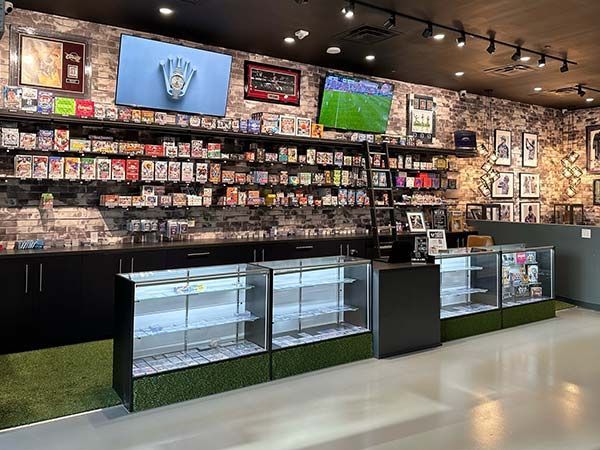
Opening a Card Shop: The Real Pros and Cons
Pros of Opening a Physical Shop
Built-in trust
- Physical presence legitimizes your brand
- High-end buyers feel safer transacting in person
Community creation
- Events, trade nights, breaks, leagues
- Repeat customers with lower acquisition cost
Multiple revenue streams
- Singles
- Sealed
- Supplies
- Events
- Buy-sell-trade margins
When paired with collectibles financing, shops can stock deeper inventory without draining cash reserves.
Cons of Opening a Physical Shop
Fixed overhead
- Rent
- Utilities
- Insurance
- Payroll
Slower flexibility
- You can’t pivot locations easily
- Seasonal foot traffic matters
Inventory pressure
- Display stock ties up capital
- Poor buying decisions compound faster
A shop amplifies both good decisions and bad ones. Without capital discipline, it becomes a cash trap.
The Mistake Most Operators Make
Here’s the common pattern:
- Growth slows
- Cash feels tight
- Operator sells long-term inventory to fund expansion
- Inventory base shrinks
- Buying power weakens
- Growth stalls again
This isn’t a shop vs online problem.
It’s a
liquidity strategy problem.
That’s why experienced operators increasingly turn to collectibles financing and inventory financing instead of liquidation.
How Collectibles Financing Changes the Equation
Collectibles financing allows operators to:
- Access capital without selling inventory
- Maintain ownership of appreciating assets
- Increase purchasing power during key buying windows
- Smooth cash flow timing gaps
This matters whether you:
- Stay online and scale volume
- Open a shop and stock deeper
- Run a hybrid model (which many do)
Leverage, when used intentionally, doesn’t replace discipline.
It
rewards it.
Online vs Physical vs Hybrid: The Strategic View
Online-Only Makes Sense If:
- You prioritize speed and flexibility
- You rely on high inventory turnover
- You want minimal fixed costs
- You use funding strictly to accelerate buying cycles
Physical Shop Makes Sense If:
- You want brand permanence
- You thrive on community and repeat buyers
- You can manage overhead with discipline
- You use financing to avoid inventory starvation
Hybrid Often Wins Because:
- Online handles velocity
- Physical builds trust and margin
- Financing supports both without asset sales
The strongest operators aren’t choosing sides.
They’re
stacking advantages.
Opportunity Cost: The Part Most People Ignore
Every dollar locked in unsold inventory has a cost.
Every card sold too early has a cost.
The question isn’t:
“Can I afford funding?”
It’s:
“What does not having access to capital cost me over the next 12 months?”
Missed collections.
Missed bulk buys.
Missed timing.
That’s the silent tax of cash-only growth.
FAQ: Sports Card Loans
How do sports card loans fit into this decision?
Sports card loans are one form of collectibles financing that help operators fund growth without selling inventory. They support both online scaling and physical shop launches.
Is financing riskier than selling cards?
Selling feels safer emotionally, but it permanently removes assets. Financing preserves ownership when used responsibly.
Can online sellers qualify for collectibles financing?
Yes. Lenders focus on revenue, consistency, and inventory knowledge—not whether you have a storefront.
Do physical shops need more capital than online sellers?
Usually, yes. Fixed costs increase pressure, which is why structured funding matters more for shop owners.
What’s Next
If you’re weighing this decision, you’re not looking for validation.
You’re looking for
leverage with structure.
At a certain level, staying cash-only slows you down more than it protects you. Exploring funding options isn’t a commitment—it’s due diligence.
For serious operators, understanding how collectibles financing fits into your growth plan is part of running a real business—not just flipping cards.
If you want to move faster without shrinking your inventory base, the next step is simply learning what capital options are available for businesses like yours.