
How to Turn a High Volume Sports Card Trading Business Into a Retail Card Shop
Summary
Many high-volume sports card traders eventually reach a point where online flipping and show deals are no longer enough. Sales are strong, inventory moves fast, and revenue may exceed $20K per month. But scaling further often requires a bigger step: opening a retail card shop. The challenge is that most traders have significant capital tied up in inventory. Instead of selling valuable cards to fund the transition, experienced operators increasingly use sports card loans and collectible-backed funding to unlock working capital while maintaining ownership of appreciating assets.
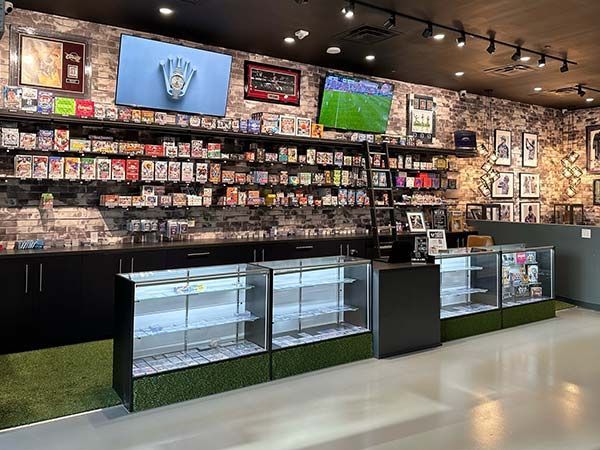
The Turning Point Every Serious Card Dealer Eventually Faces
Running a successful trading operation means holding valuable assets.
These may include:
- PSA 10 rookie cards
- Vintage sports card inventory
- Modern slabs
- Sealed hobby boxes
- Bulk collections waiting to be graded
The problem is simple.
Most of that capital is locked inside inventory.
Even profitable traders may have six figures worth of cards but relatively limited liquid cash.
That creates a difficult decision.
Sell valuable inventory to fund a shop…
or delay expansion and keep flipping cards.
This is exactly where borrow against collectibles strategies begin to make sense.
The Hidden Cost of Selling Inventory to Fund a Store
Selling inventory may seem like the easiest way to raise capital.
But for experienced operators, the opportunity cost can be significant.
Imagine selling:
- A rare rookie card you expect to appreciate
- A collection of vintage slabs
- High-end inventory that consistently attracts buyers
Those assets could increase in value over time.
Liquidating them simply to fund lease deposits or store buildouts may weaken your long-term position.
That’s why many professional traders explore alternatives like:
- sports card loans
- collectibles financing
- card backed lending for dealers
- inventory financing for card shops
- borrow against graded cards
The goal isn’t to avoid responsibility.
The goal is capital efficiency during expansion.
Why Retail Businesses Often Use Leverage
Opening a retail location almost always involves a temporary capital gap.
Expenses appear before revenue catches up.
Typical startup costs include:
- Retail lease deposits
- Store buildout and display cases
- Inventory expansion
- Marketing and launch events
- Staff hiring
Most retail industries solve this challenge through financing.
Restaurants, franchises, and retail chains rarely expand using only cash.
Sports card businesses are beginning to follow the same model.
With sports card loans, traders can access liquidity while maintaining ownership of their inventory.
How Sports Card Loans Help Traders Open Shops
Strategic funding allows dealers to transition into retail much faster.
Preserve Valuable Inventory
Instead of selling high-end slabs to raise cash, operators can use card backed lending to unlock liquidity.
This preserves long-term assets while funding the new store.
Build Strong Opening Inventory
Successful shops open with deep inventory.
Funding allows dealers to stock:
- sports cards
- Pokémon and TCG products
- sealed hobby boxes
- graded slabs
- collectible memorabilia
A strong opening inventory attracts collectors immediately.
Increase Purchasing Power
Once the shop opens, dealers must constantly buy collections.
Access to capital ensures the shop can compete with other buyers in the market.
Reduce Growth Delays
Without financing, many traders spend years saving for a store.
Strategic funding accelerates the timeline dramatically.
What Lenders Look for in Card Dealers
Funding options designed for collectibles businesses typically focus on established operators.
Most lenders evaluate several key factors.
Proven Revenue
Many programs require at least:
- $20,000 or more in monthly revenue
This demonstrates that the business model already works.
Registered Business Structure
Qualified applicants usually operate through:
- LLCs
- S-corporations
- registered trading businesses
This shows professional operations.
Valuable Collectible Assets
Collateral may include:
- graded sports cards
- vintage inventory
- sealed hobby boxes
- rare collectibles
Experienced lenders understand the liquidity of these assets.
Market Knowledge
Dealers with a strong track record demonstrate knowledge of pricing, grading, and collector demand.
That reduces risk significantly.
The Discipline Behind Smart Leverage
Using funding effectively requires strategy.
Experienced operators typically follow a simple framework.
- Access capital intentionally
- Deploy it into growth opportunities
- Turn inventory efficiently
- Repay responsibly
- Unlock larger capital pools over time
This cycle creates momentum.
Many multi-location dealers and large card shops scale because they combine strong operations with smart capital management.
Leverage becomes a growth tool.
Why Traditional Banks Struggle With the Hobby
Traditional lenders often struggle to understand collectible assets.
To them, sports cards appear speculative.
But industry-focused networks understand the fundamentals of the hobby.
They understand:
- PSA and BGS grading standards
- liquidity of high-end cards
- sealed product demand cycles
- collector psychology
This is why platforms like Vault Netwrk are emerging.
Vault Netwrk connects dealers with lenders and investors who already understand the collectibles ecosystem.
Instead of forcing traders into generic loans, the system focuses on collectible finance designed for the hobby.
FAQ About Sports Card Loans
What are sports card loans?
Sports card loans allow collectors or dealers to borrow money using valuable cards as collateral while maintaining ownership of those assets.
Can sports card dealers qualify for funding?
Yes. Dealers generating consistent revenue and holding valuable inventory often qualify for card backed lending programs.
What types of cards qualify for loans?
High-value graded cards, vintage inventory, sealed boxes, and rare collectibles are commonly accepted as collateral.
Are sports card loans only for struggling businesses?
No. Most borrowers are profitable traders seeking working capital to scale operations or open retail locations.
Do I lose my cards when borrowing against them?
No. In most structured lending arrangements, you retain ownership while the asset secures the funding.
What’s Next
If you’re running a high-volume sports card trading business, the next stage of growth often involves moving into retail.
But expansion shouldn’t require sacrificing the assets that helped build your business.
That’s why many experienced operators explore collectibles financing and sports card loans as part of their growth strategy.
Accessing capital isn’t a weakness.
It’s discipline.
Smart operators borrow with intention, invest into strong opportunities, and maintain control of their inventory.
Vault Netwrk is building a network where traders, dealers, and investors connect around financing solutions designed specifically for the collectibles industry.
If you’re serious about turning your trading operation into a full retail card shop, exploring funding options is simply part of operating at the next level.
Completing a funding inquiry isn’t a commitment.
It’s due diligence for dealers who want to scale smarter and faster.