How High-Volume Card Operators Are Opening and Scaling Shops in 2026
SUMMARY
If you are already generating six figures per month in sports cards or TCG sales, growth is no longer about demand. It is about liquidity timing, inventory velocity, and capital deployment. This guide explains how high-volume card operators are opening and scaling shops in 2026 without liquidating prime inventory, how funding is used strategically at scale, and how businesses doing $100,000 per month or more can access capital without sacrificing long-term upside.
Why six-figure sellers use strategic capital instead of liquidating inventory
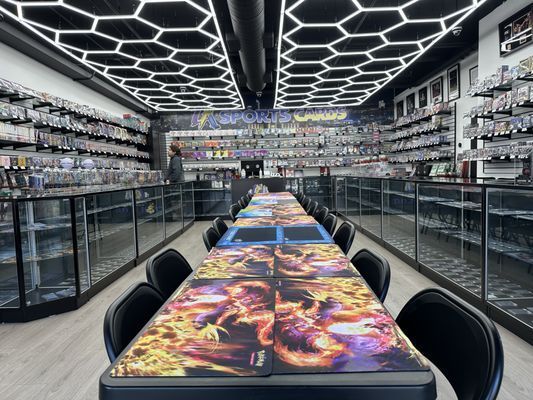
How High-Volume Card Operators Are Opening and Scaling Shops in 2026
Why six-figure sellers use strategic capital instead of liquidating inventory
Once you cross $100,000 per month in card sales, the game changes.
You already know demand exists.
You already know what inventory moves.
You already have deal flow.
The problem is no longer whether you can grow.
It’s how fast you can deploy capital without forcing bad decisions.
Most high-volume operators don’t stall because of lack of opportunity. They stall because capital is locked inside inventory, grading cycles, or timing gaps. Selling your best assets too early just to free up cash destroys long-term value.
This is why the most successful operators rethink how to open and scale a card shop in 2026. They stop treating capital as a safety net and start using it as leverage.
At Scale, Cash Flow Timing Is the Real Bottleneck
At $100K per month, revenue is not the issue. Timing is.
You deal with
- Inventory tied up in slabs and sealed
- Grading delays
- Settlement lags from platforms
- Bulk purchases that require fast decisions
- Market windows that close quickly
Waiting for inventory to sell before acting costs more than interest ever will. The real cost is missed deals and slowed momentum.
High-volume operators optimize for speed and optionality, not just margin.
Why Selling Inventory Is Often the Worst Move
At scale, liquidation becomes expensive.
Selling too early
- Locks in suboptimal pricing
- Removes upside from player performance or market cycles
- Shrinks future leverage
- Forces reactive decision making
Elite operators understand this. They hold their best inventory and use capital to stay liquid instead of dumping assets at the wrong time.
Liquidity does not require liquidation.
How High-Volume Shops Are Structured in 2026
The most effective card shops in 2026 are not built around retail fantasy. They are built around efficiency.
High-performing operators focus on
- Inventory velocity over square footage
- Buying depth instead of display breadth
- Online-first sales with strategic physical locations
- Appointment-based buying
- Aggressive collection acquisition
The shop is a distribution point.
The inventory is the business.
Capital as a Strategic Tool, Not a Lifeline
At $100,000 per month, funding should never be about survival.
It is used to
- Acquire large collections without hesitation
- Buy deeper when pricing is favorable
- Deploy capital during market pullbacks
- Smooth timing gaps between buys and sales
- Preserve personal and business liquidity
The objective is not to borrow more.
It is to
compress time and protect upside.
What Lenders Actually Care About at This Level
High-revenue operators qualify differently.
For businesses doing $100,000 per month or more, lenders focus on
- Proven revenue through business bank statements
- Positive cash flow after expenses
- Inventory liquidity
- Consistency, not volatility
- Credit behavior, typically 600+ for optimal pricing
At this level, underwriting is less about whether you qualify and more about how capital is structured.
Why Generic Loans Fail High-Volume Operators
Traditional lenders do not understand collectibles.
They underwrite retail, not inventory velocity.
They value cash, not slabs.
They move slowly while deals move fast.
High-volume card businesses need funding that understands
- Liquidity cycles
- Population scarcity
- Market demand vs hype
- Replacement cost of inventory
Without that understanding, funding becomes friction instead of leverage.
Why Vault Netwrk Works With High-Volume Operators
Vault Netwrk was built for collectors who operate at scale.
We understand
- High-value slabs
- Sealed product cycles
- Collection buyouts
- Market timing
- Long-term value preservation
That allows us to structure capital around how your inventory actually behaves, not outdated retail assumptions.
For six-figure operators, this means
- Faster access to liquidity
- Better capital efficiency
- Fewer forced sales
- Greater control over growth timing
This is not transactional funding.
It is strategic access.
The Difference Between Growth and Scale
Growth is selling more.
Scale is controlling how you sell, buy, and deploy capital.
At $100K per month, the businesses that win are the ones that
- Say yes to the right deals instantly
- Protect core inventory
- Maintain liquidity without panic
- Think in quarters and years, not weeks
Capital gives you control. Control gives you leverage.
Common Mistakes High-Revenue Operators Still Make
Even at scale, mistakes happen.
The most common ones include
- Selling premium inventory too early
- Overcommitting cash to slow assets
- Waiting too long to secure liquidity
- Using generic funding that doesn’t fit the business
- Treating capital as debt instead of leverage
The difference between plateau and expansion is often one decision.
FAQ About Scaling a Card Shop at $100,000 Per Month
Do I need a physical shop at this level
Not necessarily. Many high-volume operators add locations strategically, not emotionally.
Is revenue enough to qualify for funding
Revenue must be proven on paper and supported by positive cash flow.
Does credit still matter
Yes, but behavior and structure matter more than perfection. A 600+ score typically unlocks better pricing.
Is funding better than selling inventory
For many operators, yes. It preserves upside and keeps options open.
Next Steps
If you are already doing $100,000 per month or more in card or TCG sales, the next step is not learning how to sell more. It is deciding how you want to control capital, inventory, and timing.
Vault Netwrk works with a limited number of high-volume operators who want access to liquidity without forcing sales or sacrificing long-term value. If you are operating at scale and want to explore capital deployment options aligned with how the hobby actually works, connect with a rep to start the conversation.